Last updated: 2026-09-07
Commercial Refrigeration Oklahoma City repairs walk-in freezers across the Oklahoma City metro for restaurants, ghost kitchens, caterers, groceries, and cold-storage users. A freezer that will not pull down to 0 °F is usually a defrost problem burying the coil in ice, a door or perimeter-heater failure letting frost take over, a refrigerant undercharge, or a tired low-temperature compressor losing capacity. Low-temp systems are less forgiving than coolers, so the technician follows a set order and verifies the fix by watching the box actually recover.
What we do on the first visit
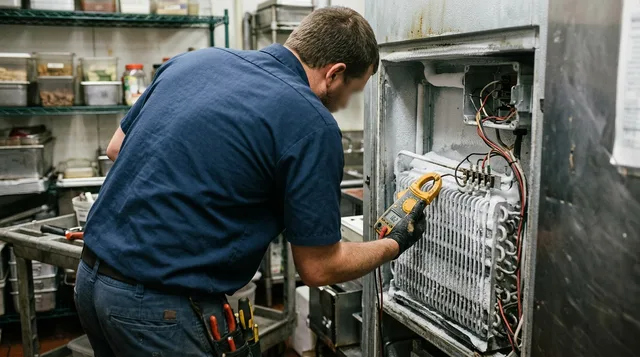
The technician records box and coil temperatures, inspects the evaporator for ice pattern and cause, and tests the defrost cycle end to end: initiation, heater amp draw across every element, termination sensor, fan-delay, and the drain line and its heater. Refrigerant pressures and superheat show whether the charge and metering are right for a low-temp application. Defrost components, door and drain heaters, controls, and fan motors are commonly stocked; a low-temp compressor or coil is quoted in writing.
Defrost is the number-one walk-in freezer failure
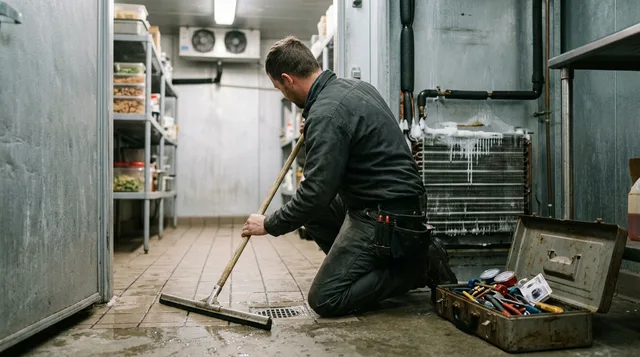
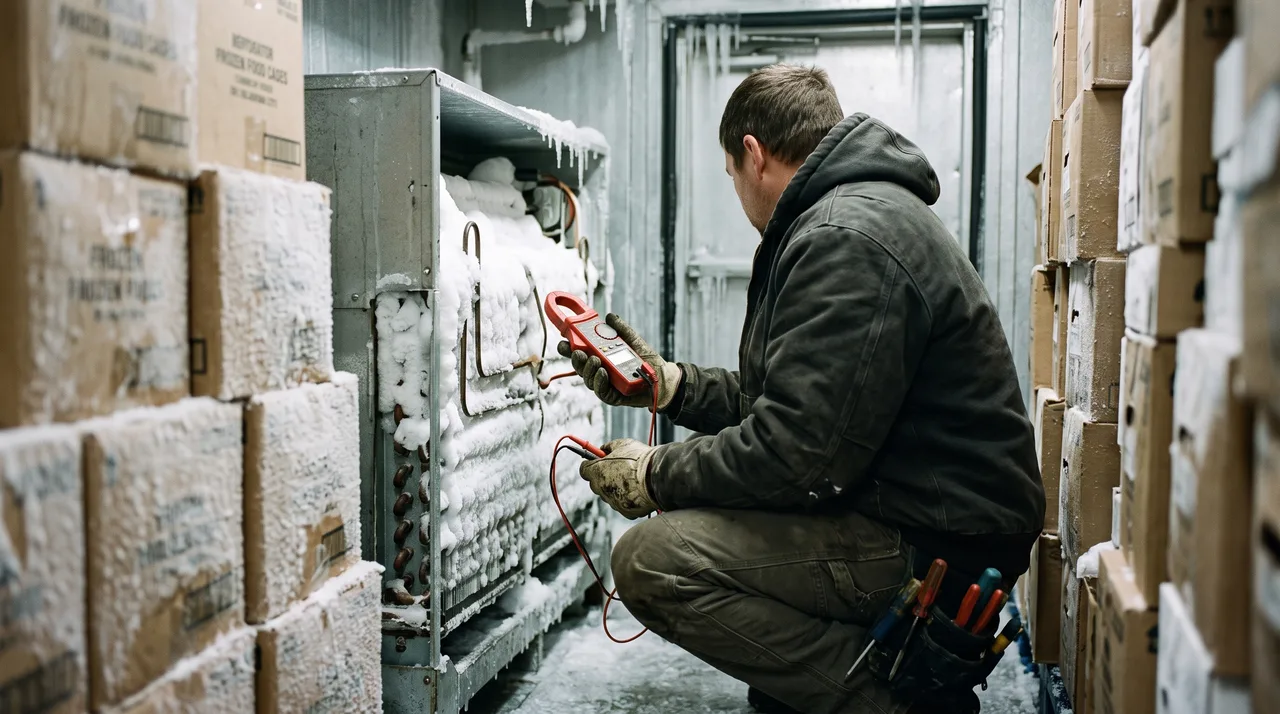
A walk-in freezer coil operates well below freezing, so every gram of moisture that enters on the airflow becomes frost on the coil. The system runs an electric or hot-gas defrost several times a day to melt that frost and send it down a heated drain. When a defrost heater element opens, the timer or electronic control fails, or the termination sensor drifts, frost is never cleared. Within a day or two the coil is a solid block, airflow stops, and the box warms even though the compressor and charge are fine. The technician ohms every heater, checks amp draw under power, verifies termination and fan-delay, and confirms the drain and pan heater actually keep the condensate moving instead of refreezing at the P-trap.
Door frost, sweating frames, and perimeter heaters
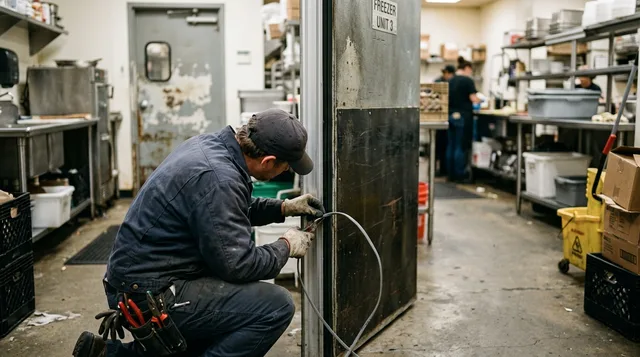
Walk-in freezer doors carry low-wattage resistance heater wire around the frame and often in the threshold and glass to stop the door from freezing shut and to keep condensation from icing the opening. In Oklahoma City's humidity, a failed perimeter heater or a torn gasket lets a ring of ice build on the frame within days, then the door stops sealing and the whole box fights a losing battle. Replacing the heater wire, the gasket, the sweep, or a failed door closer is inexpensive next to the compressor runtime and product loss a leaking door causes.
Low-temp compressors and the cost of waiting
A low-temperature compressor works harder than a cooler compressor: bigger pressure ratio, higher discharge temperature, more stress on valves and bearings. When it starts to lose capacity, the box holds 10–20 °F instead of 0 °F, the unit short-cycles, and oil breakdown accelerates the decline. Catching it at the capacity-loss stage means a straightforward compressor changeout with a new drier and an acid check; ignoring it often means a burnout that contaminates the system and turns a compressor job into a compressor-plus-cleanup job.
Insurance and payment
Frozen inventory losses are typically larger than cooler losses, and many business policies include equipment-breakdown and spoilage coverage that can reimburse both repair and product. Commercial Refrigeration Oklahoma City documents box temperature on arrival, provides the written diagnosis, and issues an itemized invoice suitable for a claim. Replacement financing is handled through installation, separate from the repair invoice.
What's included
- Flat-rate diagnostic quoted before the visit and applied to the repair
- Ice-pattern inspection and full defrost-cycle test: initiation, heaters, termination, fan-delay
- Every defrost heater element ohmed and amp-checked under power
- Drain line, P-trap, and pan/drain heater verified against refreezing
- Door service: perimeter heater wire, gasket, sweep, closer, and threshold
- Refrigerant pressure and superheat check for low-temp charge and metering
- EPA Section 608 leak isolation and repair, evacuation, and charge by weight
- Written price and schedule for any low-temp compressor or coil that must be ordered
Symptoms we get called for
- Freezer holding 15–25 °F instead of 0 °F or below
- Evaporator coil packed with ice front to back
- Water refreezing in the drain line or a sheet of ice on the floor
- Heavy frost on the door, hinges, or frame; door hard to open
- Compressor short-cycling or tripping on the low-temp system
- Product with freezer burn or soft spots after a slow recovery