Last updated: 2026-09-07
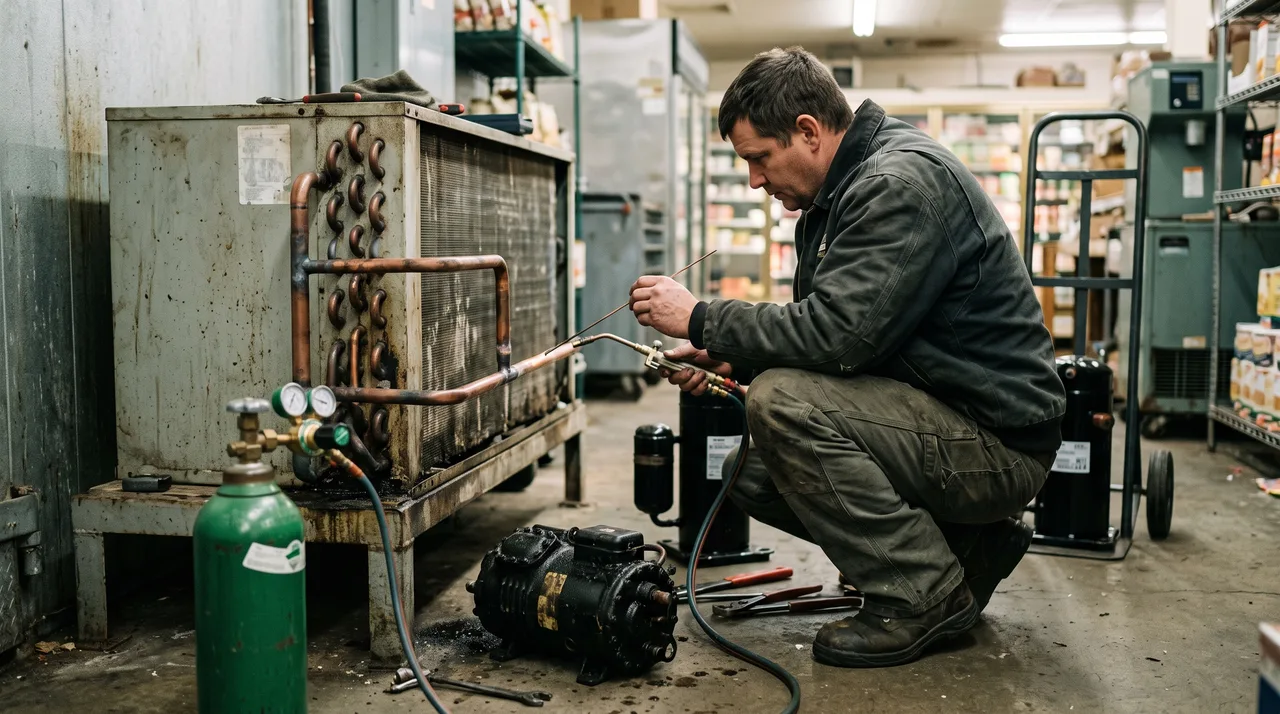
Commercial Refrigeration Oklahoma City replaces commercial refrigeration compressors across Oklahoma City on walk-in condensing units, reach-ins, merchandisers, and rack systems. A compressor is the most expensive single part in the system, so the first job is to be certain it is actually the failure and not a capacitor, contactor, stuck valve, or overcharge mimicking one. When the compressor is confirmed bad, the changeout is done properly: system recovered, failure cause corrected, new liquid-line and, on a burnout, suction-line drier, deep vacuum to 500 microns and a decay test, then charge by weight.
What we do on the first visit
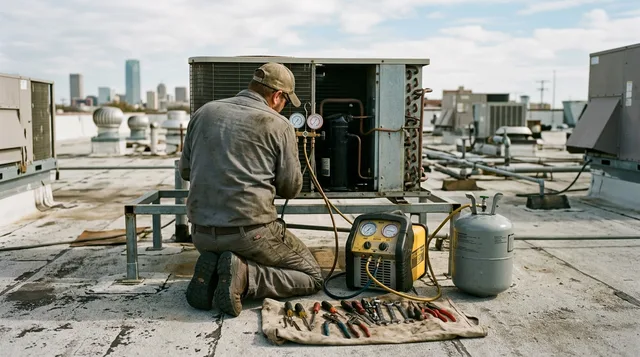
The technician verifies supply voltage, tests the start components and windings, checks for a mechanical lock or valve failure, and reads system pressures and oil condition. If the compressor is confirmed failed, the technician measures nameplate data, refrigerant type and charge, and mounting and electrical details, then quotes the exact compressor, driers, and labor. Burnout severity is assessed with an acid test kit because it changes the cleanup scope. You get a written repair-versus-replace comparison before authorizing anything.
Diagnosis before condemnation
A compressor that will not start is not automatically a dead compressor. A failed run capacitor, a weak start capacitor or relay, a pitted contactor, a seized condenser fan raising head pressure to locked-rotor, or a badly overcharged system can all produce the same symptom. The technician isolates the compressor electrically, checks winding resistance and to-ground, and confirms there is no external cause. This step routinely saves owners thousands, because the true fix is a $40 capacitor or a $90 contactor, not a compressor.
Why a burnout is not a plug-and-play swap
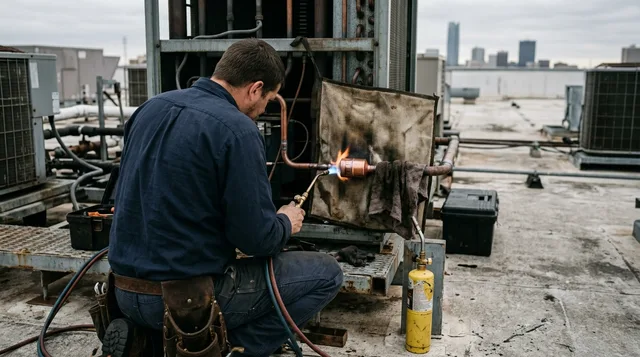
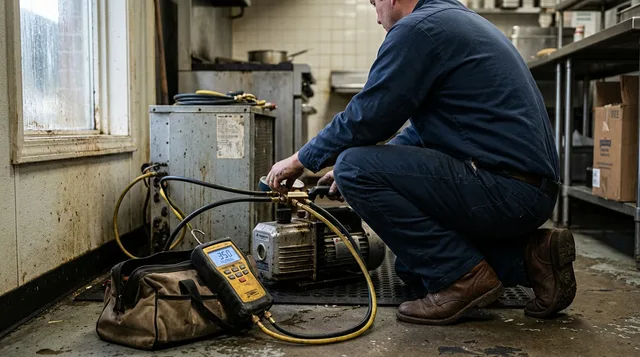
When a compressor burns out, the motor windings decompose and drive acid and carbon through the system. Dropping in a new compressor without cleaning that up guarantees a second failure. A proper burnout job recovers the refrigerant, replaces the liquid-line drier and adds an oversized suction-line drier, may require a system flush, pulls a deep vacuum with a decay test to confirm the system is dry and leak-free, then charges by weight and rechecks acid after a run-in period. This is the difference between a compressor changeout that lasts a decade and one that fails again in a season.
Repair or replace the whole unit
As a rough guide, when a compressor replacement approaches half the cost of a comparable new condensing unit or self-contained cabinet, and the rest of the equipment is 10-plus years old with a corroded coil, tired fans, and a failing cabinet, replacement is usually the better spend, especially given the efficiency gain and the refrigerant transition. When the surrounding equipment is sound, a compressor changeout is the right call and buys many more years. Commercial Refrigeration Oklahoma City gives you both numbers, including the energy and refrigerant considerations, before you decide.
Insurance and payment
Compressor failures are a classic equipment-breakdown claim, and if the failure spoiled product, a spoilage endorsement may cover inventory as well. Commercial Refrigeration Oklahoma City supplies the written diagnosis, the acid-test result, nameplate documentation, and an itemized invoice for the claim. For a full-unit replacement, financing is arranged through the installation service.
What's included
- Electrical and mechanical diagnosis to confirm the compressor is the true failure
- Winding resistance, to-ground, and start-component testing
- Acid test to grade burnout severity and set cleanup scope
- Refrigerant recovery to EPA standards and correct disposal or reclaim
- OEM or approved replacement compressor matched to nameplate, refrigerant, and application
- New liquid-line drier, oversized suction-line drier on burnouts, and system flush where required
- Deep vacuum to 500 microns with a standing decay test
- Charge by weight, superheat/subcooling verification, and a run-in acid recheck
Symptoms we get called for
- Compressor hums, draws locked-rotor amps, and trips on overload
- Unit runs but the box will not hold temperature and pressures are flat
- Compressor is noisy, knocking, or has an internal rattle
- Acid smell or blackened oil at the service port (possible burnout)
- Repeated capacitor or contactor failures in a short span
- A previous 'add refrigerant' visit that did not last