Last updated: 2026-09-07
Commercial Refrigeration Oklahoma City provides scheduled commercial refrigeration maintenance across Oklahoma City for restaurants, bars, groceries, c-stores, schools, and care facilities. Most refrigeration emergencies are preventable failures that announced themselves for weeks: a condenser filling with lint, a gasket tearing, a defrost heater weakening, a charge slowly dropping. A maintenance plan puts a technician on the equipment on a set interval to clean, measure, tighten, and document, so small problems get fixed on a scheduled visit instead of during a Friday dinner rush.
What we do on the first visit
The first plan visit is a baseline: every unit inventoried by type, brand, model, serial, refrigerant, and charge; condensers and evaporators cleaned; gaskets, doors, and closers checked; defrost cycles verified; drains cleared; refrigerant pressures, superheat, and box temperatures recorded; and a written condition report with any recommended repairs and their priority. That baseline becomes the reference every future visit is measured against.
What a maintenance visit actually covers
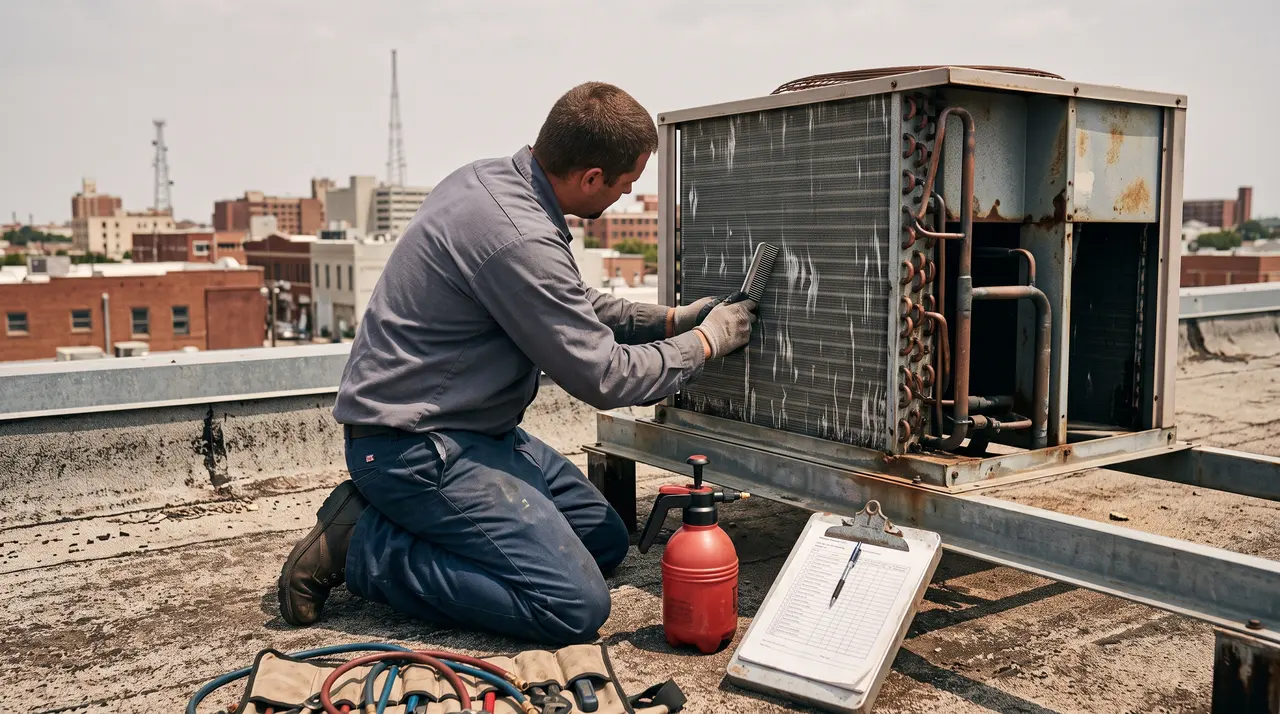
A refrigeration PM visit is not a glance and a signature. It includes condenser coil cleaning (the single biggest driver of summer failures in OKC), evaporator coil and drain-pan cleaning, drain-line clearing, gasket and door and closer inspection and minor adjustment, defrost cycle verification and heater checks, electrical connection and contactor inspection, capacitor and motor amp-draw readings, refrigerant pressure and superheat/subcooling checks against a leak baseline, temperature-control calibration, and a written log of box temperatures. On ice machines it adds a scale inspection and descale-interval check for OKC's hard water.
The math on downtime
A single lost walk-in during service can mean discarded product, comped or cancelled covers, staff sent home, and an after-hours repair premium, often well into four figures for one event. Against that, a quarterly PM visit at a modest per-unit cost that catches the failing fan motor or the tearing gasket before it cascades is straightforward arithmetic. Plan holders also get priority dispatch and a reduced or waived emergency diagnostic, which matters most on the exact night everyone else is calling too.
Documentation your health inspector and insurer want
Oklahoma retail food rules expect cold-holding at 41 °F or below and expect you to be able to show it. A maintenance plan produces a dated record of equipment temperatures and service for each visit, which supports a clean health inspection and, if a breakdown ever does spoil product, gives your insurer the maintenance history that a spoilage or equipment-breakdown claim is smoother with.
Insurance and payment
Plans are billed per unit per visit or per site, invoiced on your schedule. A documented maintenance program can reduce equipment-breakdown premiums with some carriers and strengthens any future claim; Commercial Refrigeration Oklahoma City provides the service and temperature records to support that.
What's included
- Baseline equipment inventory: type, brand, model, serial, refrigerant, charge
- Condenser and evaporator coil cleaning every visit
- Gasket, door, closer, and hinge inspection and minor adjustment
- Defrost cycle verification and heater/termination checks
- Drain line and pan clearing; drain-heater check on freezers
- Refrigerant pressure, superheat/subcooling, and leak-baseline comparison
- Temperature-control calibration and a written box-temperature log each visit
- Priority emergency dispatch and a reduced or waived emergency diagnostic for plan holders
Symptoms we get called for
- Repeated emergency calls on the same equipment
- Rising energy bills with no menu or hours change
- Health inspections flagging cold-holding temperatures
- No written temperature records for your equipment
- Equipment aging past 7 years with no service history
- A single walk-in or ice machine your whole operation depends on